Our first reveal with Genelec
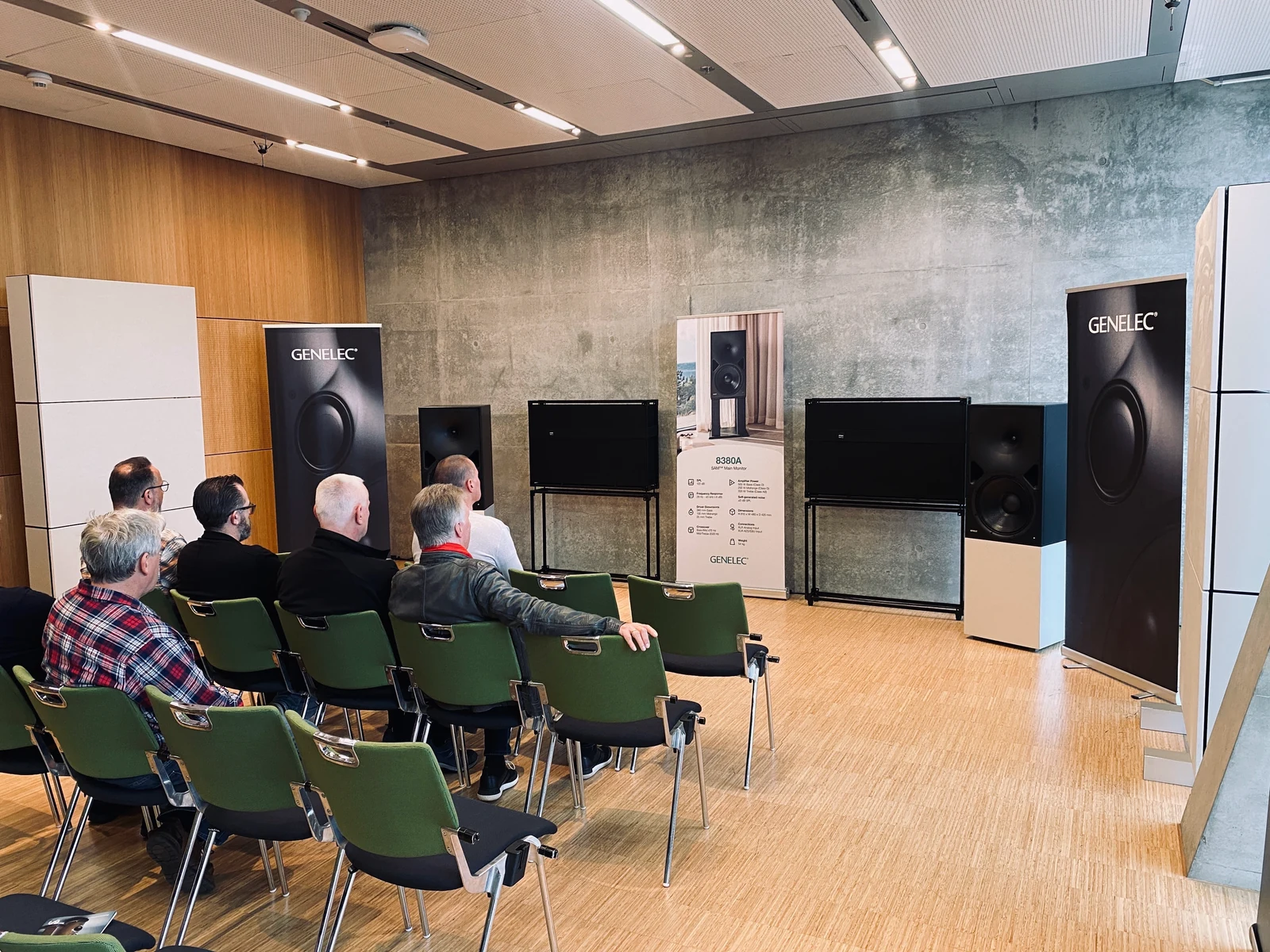
AIR and STUDIO 200 made their public debut at FINEST AUDIO SHOW Darmstadt. In a challenging conference room, we heard the difference acoustic treatment made to the 8380A demonstration.
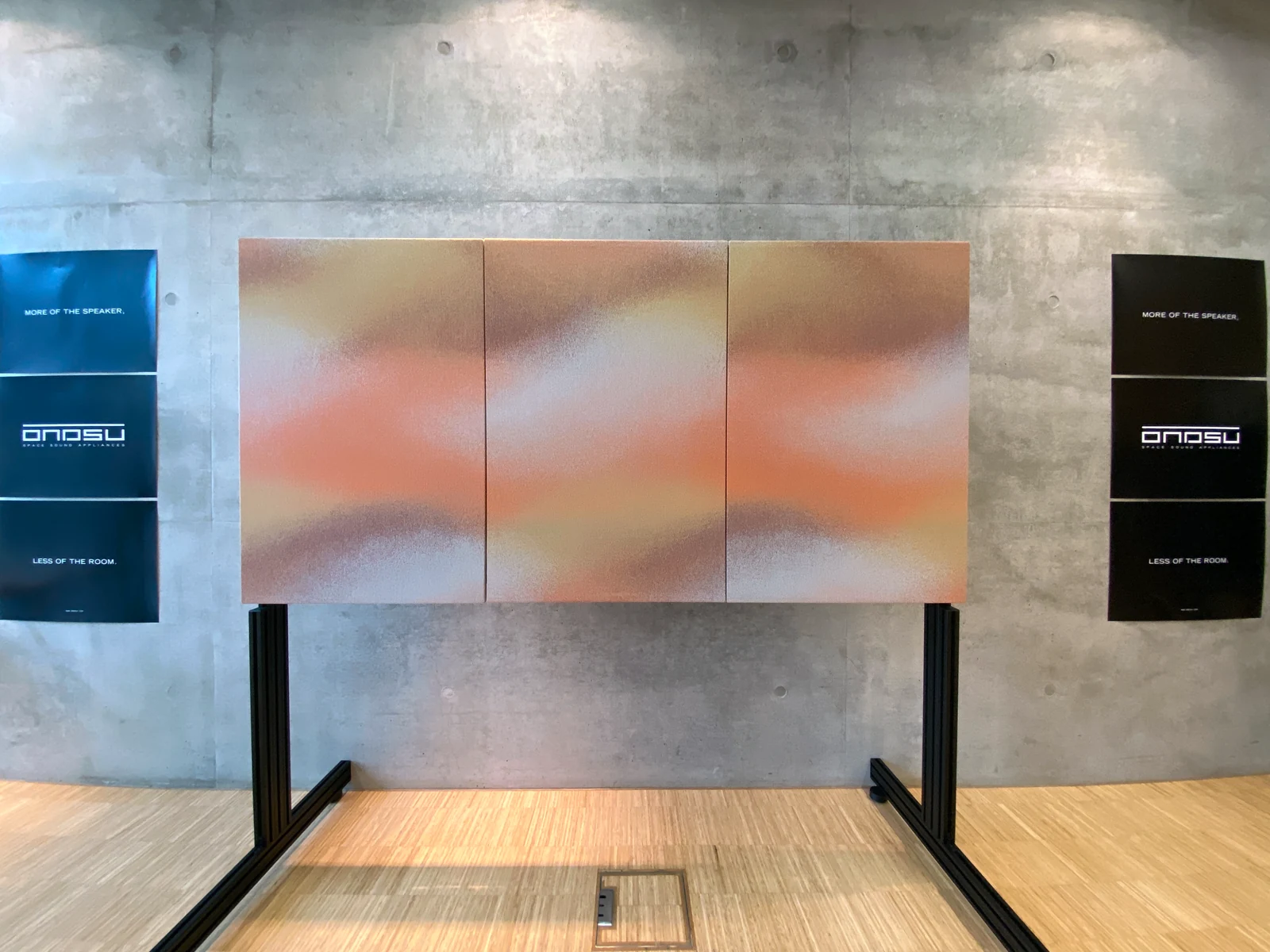
An audio show asks a loudspeaker to perform in a room it was never designed for. At the darmstadtium on 17 and 18 October 2026, we joined Genelec to bring acoustic treatment into its 8380A listening room. It was the first public in-person showing of AIR and STUDIO 200.
We heard a clear improvement in how the monitors sounded in the treated setup. In a conference room like this, the acoustics can make it difficult to hear what a loudspeaker is capable of. Helping that quality come through was the purpose of our work.
The room is part of the demonstration
Sound reaches a listener directly from the loudspeakers and through reflections from the surrounding surfaces. When that reflected sound lingers, it can overlap the notes that follow and make musical detail harder to distinguish. Loudspeaker placement, the listening position and acoustic treatment all shape the experience.
Listening around the show reinforced that point for us. Some considerably more expensive systems in other rooms sounded less convincing to our ears. These were informal impressions across different rooms and setups, but they underlined how much the listening environment matters, whatever the equipment budget.
For a manufacturer, a demonstration is a chance for people to hear what the loudspeaker can do. Room acoustics deserve a place in that preparation alongside the system itself. In Darmstadt, the 8380A monitors and GLM room-adaptation technology were presented together with our treatment of the listening space.
What the measurements tell us
The measurements supplied by Genelec help explain the difference we heard. They recorded shorter average sound decay in the treated setup: sound faded sooner, leaving less lingering energy to overlap what came next.
Setup | Average sound decay |
|---|---|
Empty room, no treatment, speaker on the floor | 0.84 seconds |
Room with ONDSU acoustic treatment | 0.53 seconds |
That is 0.31 seconds shorter, or approximately 37% less time for sound to decay between these two setups. It describes how long sound lingers in the room; it is not a percentage rating of sound quality.
For readers looking at the technical detail, the figures are the reported average RT60 for the left 8380A in each setup. RT60 estimates the time for sound to fade by 60 decibels after the source stops. Both report excerpts are labelled “after calibration”. The comparison does not establish identical speaker and microphone positions, furnishings or occupancy, so it does not isolate the panels’ contribution from other setup changes.
Acoustic treatment with a place in the interior
AIR is the textile-covered acoustic panel of PX SYSTEM™. It provides acoustic absorption on its own. STUDIO 200 adds a 200 mm acoustic core behind AIR to extend treatment towards lower frequencies while retaining the same visible face. The two combine in freestanding arrangements.
The show installation used Ultrasuede from Knoll Textiles and Nova by Sander Lak for Maharam. Ultrasuede has a suede-like surface. Nova brings a large-scale colour pattern, shown running continuously across three AIR panels in our display.
The textile forms the visible layer over the absorber. Its colour, texture and pattern give the treatment a place within the interior. The cover can be replaced while the aluminium frame and acoustic core remain in place, allowing the material to change with the room.
Thank you to the team for the invitation and collaboration, and to everyone who joined us to listen and talk acoustics.
FINEST AUDIO SHOW Darmstadt, 17 and 18 October 2026. Room 3.06 Xenon, darmstadtium.